Threescore years and ten

Click for source

Your days are numbered.

That is a sobering thought.  You have a finite number of heart-beats left.  When you’ve reached your allotted tally there will be no more.

To put it starkly, we are in the queue for the crematorium.  It may be a long queue, but it’s getting shorter all the time.

Queen Elizabeth the First is supposed to have said on her death-bed “All my possessions for a moment of time.”  In her day she was the richest person alive, yet she had no bargaining chips with death.  And neither do we.

One person who felt this very keenly was Moses.  He wrote Psalm 90 (the only Psalm of the 150 which is attributed to him).  He knew from bitter experience that the LORD places a final limit upon us.  Though he was loved by God, he perished in the wilderness, short of the promised land.  This death sentence is often spoken of in Numbers and in Deuteronomy.  It was a non-negotiable decree: Moses will not cross the Jordan.  He must die in the desert.  Therefore he journeyed through the wilderness and prepared his people for the future with the certain knowledge that he would not make it.  The shadow of death fell across everything he did.  And so he writes from experience these verses:

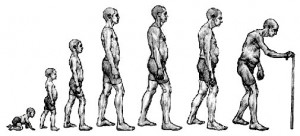
9 For all our days are passed away in thy wrath: we spend our years as a tale that is told.   10 The days of our years are threescore years and ten; and if by reason of strength they be fourscore years, yet is their strength labour and sorrow; for it is soon cut off, and we fly away.  11 Who knoweth the power of thine anger? even according to thy fear, so is thy wrath. 12 So teach us to number our days, that we may apply our hearts unto wisdom.  (Psalm 90:9-12)

We naturally fear death and seek to put it out of our minds.  But Moses instructs us in a different course.  To “number our days” is to apply our hearts to wisdom.

I wonder if this means more than simply embracing our mortality.  It takes no great spiritual insight to figure out that the grave awaits.  But I wonder whether the numbers themselves are important here:

The days of our years are threescore years and ten; and if by reason of strength they be fourscore years (Psalm 90:10)

Threescore and ten (70) and fourscore (80) have theological significance.  Seven (and its multiples) represents completion.  There are 7 days in the week, the seventh is a day of rest and then the week is over.  The eighth day is the first day of a new week.  8 (and its multiples) means we have broken through to a whole new beginning.

And so Jesus lay in the ground on the seventh day.  His natural life had come to an end.  But “by reason of Almighty strength” He burst through into a whole new beginning on the eighth day.

And in Psalm 90 we have a trace of this.  There is a natural life-span of seven-ness.  But then there may be an operation of “strength” whereby a lifespan breaks through into eight-ness.  Here is a little gospel proclamation in the midst of our mortality.  Though our natural lives will run their course, there is a “strength” that will deliver us into life beyond natural life.

So to “number our days” is not simply to consider our finitude – though that is essential.  If we really want to apply our hearts to wisdom we must know that “by reason of God’s resurrection strength” there is life beyond limit.  Yes there is an end to this natural lifespan and I must face that.  But through Christ there is also an eighth-day-reality – a new beginning on the other side of death.

One day, beyond our last day, there will be days without number.  And today every day is a day closer.

Bite the dust

Click for source

It’s a euphemism for death, but these days we rarely talk of people “biting the dust” – not in a final sense anyway.

We might say that a plan or project has bitten the dust.  But describing a person’s death as biting the dust seems the preserve of tough-talking cowboys.

The exact wording – bite the dust – is found nowhere in the bible.  Yet it is thoroughly biblical in origin. This is because the phrase depends on a whole biblical theology of dust and eating.  Let me explain:

In Genesis 2, man was made from the dust.

In Genesis 3, man listens to the serpent (i.e. Satan) and so must return to dust.

And Satan is cursed to eat dust all his days (Genesis 3:14)

Thus Satan is set up as a maneater (1 Peter 5:8)

Yet Christ will join man to crush the maneater (Genesis 3:15)

How will He do this?  Incredibly, by being Man eaten (John 6:51)

Only in this way does He swallow His enemies (1 Corinthians 15:54)

Now those who don’t eat (with) Christ get eaten (Revelation 19:18)

But those who do eat Christ join Him in crushing the maneater (Romans 16:20)

Therefore Satan will eat dirt all the days of his life (Micah 7:17; Revelation 20:10)

And all those who follow him will likewise “lick the dust” (Psalm 72:9)

[The Messiah’s] enemies will lick the dust.  (Psalm 72:9)

So then the Christian can do their own John Wayne impression.  Because of Christ’s victory we can use some very tough talk on Satan.  We can say:

“Eat dirt man eater!  There’s one Man you couldn’t swallow.  He’s swallowed you.  Our food will be the Man eaten.  And you will bite the dust forever.”

To the ends of the earth

Click for source

The Hebrew language abounds in double entendres.  We have already considered the multiple shades of meaning to the word “adam“.  It refers to the historical person of Adam, to a man and to man (meaning humanity).  The way the Bible thinks of things, what happens to the man Adam happens to all man.

Or consider the verb “nasa“.  It means “lifted up” but it also means “bear the weight of” and it’s the verb “to forgive.”  Thus to the Hebrew mind, the One lifted up is the One bearing a weight in order to forgive.  But I digress…

Today we consider the Hebrew word “eretz”.  It’s a word that means both “land” and “earth.”  In particular it has that double meaning of the land (the promised land) and the earth.  When a Hebrew speaker refered to Canaan as the “eretz” they were viewing this small strip of land at the end of the Mediterranean as a token of the whole world.

When the phrase “the ends of the earth” is used (and it’s used 27 times in the Old Testament) it has this lesser and greater reference.  And never is this more obvious than in Psalm 72:8.  It speaks about the Ideal King, the Messiah:

He shall have dominion also from sea to sea, and from the river unto the ends of the earth.

Does this mean that the King of Israel will rule from the Mediterranean to the Sea of Galilee and from the Jordan unto the ends of the land?  Well, approximately, Solomon achieved this.  But he was only a micro-king ruling over a microcosmos.  When the Israelites saw a King like Solomon reigning over a united Israel, they were witnessing a charcoal sketch of a glorious fresco.  At its pinnacle, everything the Israelite monarchy could hope to be was a mere shadow of the righteous reign of King Jesus.

Give the king thy judgments, O God, and thy righteousness unto the king’s son. 2 He shall judge thy people with righteousness, and thy poor with judgment.

3 The mountains shall bring peace to the people, and the little hills, by righteousness. 4 He shall judge the poor of the people, he shall save the children of the needy, and shall break in pieces the oppressor. 5 They shall fear thee as long as the sun and moon endure, throughout all generations. 6 He shall come down like rain upon the mown grass: as showers that water the earth. 7 In his days shall the righteous flourish; and abundance of peace so long as the moon endureth.

8 He shall have dominion also from sea to sea, and from the river unto the ends of the earth. 9 They that dwell in the wilderness shall bow before him; and his enemies shall lick the dust. 10 The kings of Tarshish and of the isles shall bring presents: the kings of Sheba and Seba shall offer gifts. 11 Yea, all kings shall fall down before him: all nations shall serve him.

12 For he shall deliver the needy when he crieth; the poor also, and him that hath no helper. 13 He shall spare the poor and needy, and shall save the souls of the needy. 14 He shall redeem their soul from deceit and violence: and precious shall their blood be in his sight.

15 And he shall live, and to him shall be given of the gold of Sheba: prayer also shall be made for him continually; and daily shall he be praised. 16 There shall be an handful of corn in the earth upon the top of the mountains; the fruit thereof shall shake like Lebanon: and they of the city shall flourish like grass of the earth.

17 His name shall endure for ever: his name shall be continued as long as the sun: and men shall be blessed in him: all nations shall call him blessed. 18 Blessed be the LORD God, the God of Israel, who only doeth wondrous things. 19 And blessed be his glorious name for ever: and let the whole earth be filled with his glory; Amen, and Amen.   (Psalm 72)

My cup runneth over

Click for source

For many it’s their favourite “King James” phrase.  Yet, as far as I can tell, it was the Geneva Bible of 1587 that first gave us this wonderful wording:

My cup runneth over.”  (Psalm 23:5)

Here is the expectation of the Messiah as He faces “the valley of the shadow of death.”  He will come through to victory and feasting at the LORD’s table.  He will be publicly vindicated, anointed and His cup will run over (read Psalm 23).

This gives us two sources of confidence:

First, the Messiah’s life and blessings have a super-abundant quality.  They spill over in excess.  If we would seek His vindication, His anointing, His place at the feast, then we can take comfort that He has more than enough blessing to go around.  Christ has not won His victory for Himself alone – His cup runneth over.  And His blessings are not dished out with a teaspoon.  Rather, as John declares “Of His fulness have all we received, and grace for grace.”  (John 1:16)

Second, Psalm 23 lets us in on a calculation that Christ made as He faced “the valley of the shadow”.  He weighed the darkness of the valley against the cascading fullness of the LORD’s blessings.  And in Christ’s estimation, the overflowing cup was worth the dark and dreadful valley.

If that’s Christ’s estimation then we can be sure that whatever valley we face, the vindication will make it worthwhile.  Even Christ’s cross was worth it for the sake of the feast.  How much more will our little crosses and sufferings be made to seem trifling in comparison with the weight of glory in store for us?  (2 Corinthians 4:17)

As Martin Luther has said:

“If we consider the greatness and the glory of the life we shall have when we have risen from the dead, it would not be difficult at all for us to bear the concerns of this world. If I believe the Word, I shall on the Last Day, after the sentence has been pronounced, not only gladly have suffered ordinary temptations, insults, and imprisonment, but I shall also say: “O, that I did not throw myself under the feet of all the godless for the sake of the great glory which I now see revealed and which has come to me through the merit of Christ!”

Christ’s cup overflows to us.  And through Him even our cup will overflow.

Therefore even the darkest valley will be worth it.

The valley of the shadow of death

Click for source

When his son Absalom briefly usurped his throne, David withdrew from Jerusalem.  He crossed the Kidron valley, ascended the Mount of Olives and escaped to safety.

“And all the country wept with a loud voice, and all the people passed over: the king also himself passed over the brook Kidron, and all the people passed over, toward the way of the wilderness.”  (2 Samuel 15:23)

Here was the King after the LORD’s own heart, but now he passes through the valley of deep shadow (Kidron is related to words for blackness and mourning).  It is a walk of shame as he passes through this valley at the people’s head.  He is heading towards the summit of the Mount of Olives (where the garden of Gethsemane stands).  And he seems to be abdicating his throne forever.

Some contend that David had the Kidron Valley in mind as he wrote Psalm 23:

Yea, though I walk through the valley of the shadow of death, I will fear no evil.”

Perhaps though it’s better to see things the other way around.  Psalm 23 is, originally, the words of the Messiah’s sufferings and glories which are placed on David’s lips.  David’s own typological experiences in the Kidron Valley are foretastes of Christ’s ultimate valley.

Jesus is the King who takes that great and fearful walk of shame.  He enters into the darkness of death itself.  And John felt it was necessary to add this detail as he recounted Christ’s final hours:

Jesus went forth with his disciples over the brook Cedron, where was a garden, into the which he entered, and his disciples.  (John 18:1)

Where David crossed the Kidron and then passed through the garden of Gethsemane, Christ stopped at the garden.  Christ could have kept going to safety, just as David had.  He could have used this ancient escape route.  Instead He pauses, prays and accepts the cup of suffering from His Father (Matthew 26:36-46).  Jesus awaited arrest in this garden that He might be brought back to Jerusalem and face the utter depths of death’s darkest valley.

Christ has chosen to walk our path and to do so at our head.  Like a needle piercing the black shroud of death He passes through, bearing the brunt of its terrible curse.  And we trail behind Him like the thread, pulled through in union with our suffering King.

We cannot pray the twenty third Psalm by ourselves.  Hebrews 2:15 reminds us that we are naturally slaves to our fear of death.  As we contemplate this valley we fear much evil.  And so we should – death is our ultimate enemy.

Yet we do not pray Psalm 23 alone.  First of all Christ prays it.  First of all He walks that path and comes through into feasting, victory and joy.  But He does it as our Forerunner.  If we belong to Him, His victory is our victory.  Today He still prays this Psalm for us and in us as our Intercessor, High Priest and Friend.  As we hear His song, we allow His voice to tune our hearts.  And soon – imperfectly but no less really – we will find ourselves joining in:

Yea, though I walk through the valley of the shadow of death, I will fear no evil, for Thou art with me!

The LORD is my Shepherd

Click for source

In between the Psalm of the cross (Psalm 22) and the Psalm of Christ’s ascension back to heaven (Psalm 24) we have the 23rd Psalm – a Psalm of resurrection.

“1The LORD is my shepherd; I shall not want. 2He maketh me to lie down in green pastures: he leadeth me beside the still waters. 3He restoreth my soul: he leadeth me in the paths of righteousness for his name’s sake.  4Yea, though I walk through the valley of the shadow of death, I will fear no evil: for thou art with me; thy rod and thy staff they comfort me.  5Thou preparest a table before me in the presence of mine enemies: thou anointest my head with oil; my cup runneth over.  6Surely goodness and mercy shall follow me all the days of my life: and I will dwell in the house of the LORD for ever.”

If we assume that the Speaker remains unchanged throughout this section of the Psalms then we can see this song as, first of all, the prayer of the Messiah as He faces “the valley of the shadow of death.”

Indeed many clues within the Psalm would confirm this.  The whole song is intensely personal – there is only one blessed man here.  And He is contrasted with the many enemies in whose midst He will be vindicated.   He seems to be uniquely hosted at this celebratory table beyond death.  There He is “anointed” (another way of saying christed).  And the final verse could most literally be translated “I will return to the house of the LORD for ever.”

Believers certainly look forward to entering the house of the LORD forever.  But the only Man to return to heaven is the One who came from heaven – Christ Himself (John 3:13).

So this Psalm is, originally, the song of the Messiah who would suffer and then be glorified.  Yet as we watch the way He handles death we will gain much comfort as we walk through that valley with Him and in Him.

And the first comfort Christ confesses is this opening phrase: “The LORD is my Shepherd.”

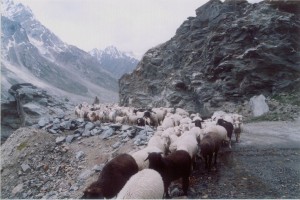
There’s an oft-reapeated biblical phrase that first appears in the book of Numbers: “sheep without a shepherd.”  It describes a leaderless rabble who need a loving and strong ruler to guide them.  Sheep are notoriously foolish creatures.  They require much closer attention than most animals.  And the LORD pictures His care for His people as Shepherd.  Not Coach or Instructor, as though He simply issues commands from a distance.  He is a Shepherd which means He is very hands-on in the care He gives.

As we read this Psalm we get a sense of that “hands-on care.”  Everything the Psalmist experiences in life, death and beyond is due to the intimate guidance of the LORD.  This Psalm is a counterfoil to the cry of godforsakenness we heard on Sunday.  Here the Messiah declares that everything that happens to Him – up to, including, and beyond “the valley of the shadow” – is the result of the intensely personal shepherding of the LORD.  It is a loving Shepherd who guides Him through death and back to the table – a loving Shepherd who can be trusted to know best.

And as we hear the warmth of Christ’s descriptions of His Father we gain courage for our own walk.  You see sometimes we can sing the 23rd Psalm with quiet confidence and trust.  Yet sometimes “the rod and staff” of the LORD do not comfort us.  Instead they anger us or make us despair.  Many times we do fear evil, and especially as we face that dark and terrible valley.

Yet this is a path that Christ has walked.  And He has walked it for us.  He has walked it as the trusting and obedient Son of the Father.  He has submitted to the rod and staff.  He has submitted to the deep darkness and come through to glory. Our hope is not in our own “dying well”.  Our hope is in the fact that He has died well.  And if we trust Him, we are in Him, carried through to share a place at the table.

But as we walk our own path, let us allow Christ’s vision of the Father to be our own.  He could trust the LORD even as He headed for Jerusalem, even in Gethsemane, even at Calvary.  He could see that on the other end of the rod and staff there was a loving Shepherd.  He had faith that the feast would make the valley worthwhile.

Therefore, as we face our own sufferings and death let us allow His song to sink into our hearts.  Let His faith in the Father be ours.  And then we too will sing with confidence “The LORD is my Shepherd.”

Laughed to scorn

Click for source

When Jesus cried out “My God, My God, why hast thou forsaken me?” it implied more than this single cry of dereliction.  Before chapter divisions were inserted into the biblical text (in the 12th century AD), a person would reference a Psalm by quoting its first line.  And when we study the whole of Psalm 22, we get a unique window onto the horrors of Christ crucified.

The Psalm that begins “My God, My God” continues with an extended, first person account of the Messiah’s sufferings.  In verse 6 He says:

“I am a worm, and no man; a reproach of men, and despised of the people.  All they that see me laugh me to scorn: they shoot out the lip, they shake the head, saying, He trusted on the LORD that he would deliver him: let him deliver him, seeing he delighted in him.”  (Psalm 22:6-8)

A thousand years before Good Friday this Psalm predicts the whole experience of crucifixion – even quoting in advance the words of the crowd at Calvary (Matthew 27:41-43).

The phrase “laughed to scorn” is the KJV’s consistent translation of a single Hebrew word which carries both senses of laughing and scorn.  Nowadays we would call this an amplified translation.  If such a policy is employed too often it can make for onerous reading.  Yet when deployed sparingly and with a poet’s ear, it enriches a translation.

The King James Bible cannot claim the credit for this turn of phrase – it appears in Miles Coverdale’s (1540) and John Rogers’ (1549) translations.  The saying caught the attention of William Shakespeare, who perhaps knew the phrase from its use in the Bishop’s Bible of 1568.  He thought it eloquent enough to use in a key passage of Macbeth:

Be bloody, bold, and resolute; laugh to scorn
The power of man, for none of woman born
Shall harm Macbeth.
(Act 4, scene 1)

Shakespeare has caught the bible’s meaning.  To laugh to scorn is to deride something – to deem it as nothing and laugh contemptuously at it.  That’s how Macbeth considered “the power of man.”  And it’s how the power of man considers the Messiah.  We laugh Him to scorn as He dies in apparent weakness.

Yet there is a profound irony here.  These mockers felt so superior to Christ, yet their derision was actually proving His Messiah-ship.  As they laugh Him to scorn they only serve to prove that Jesus is the Messiah of Psalm 22.  It’s just one of several striking fulfilments of the Psalm on Good Friday.  The Messiah continues…

I am poured out like water, and all my bones are out of joint: my heart is like wax; it is melted in the midst of my bowels.  My strength is dried up like a potsherd; and my tongue cleaveth to my jaws; and thou hast brought me into the dust of death. For dogs have compassed me: the assembly of the wicked have inclosed me: they pierced my hands and my feet.  I may tell all my bones: they look and stare upon me.  They part my garments among them, and cast lots upon my vesture.  (Psalm 22:14-18)

The One who appeared so laughable on that cross is seen – in the light of Scripture – to be in complete control.  As they pierce His hands and feet, as they mock Him, as they gamble for His clothes, they are only establishing the identity of Jesus.  He is the Messiah, promised of old, the One who must suffer, must die and must rise again.  He will endure the scorn for now.  But He will have the last laugh.

My God, My God, why hast thou forsaken me?

Click for source

We’ve seen how the Psalms proclaim Christ.  These songs show the interplay of four main players:

1) God

2) The Ideal King (Christ)

3) Those who trust in Him

4) The wicked

Some of these songs are the words of God to His King (His Christ).  Some of them are the people’s words to God about the King.  Some of them are comparisons of the wicked and the true King.  And so many of them, like Psalm 22, are the words of the King to God.

David was well aware that it was the Lord’s words that were on his lips as he wrote such Psalms (2 Samuel 23:2).  He was voicing the prayers of the Ideal King – the Messiah.

And incredibly, these prayers take in a whole range of emotions – from joy to anger to utter despair.  So when Christ was born into our situation – full of joy, anger, despair etc – He uses these prayers that He had prepared for Himself and takes them on His human lips.  He enters into the fullness of our predicament.  He sings all our songs

And that includes even this one:

My God, my God, why hast thou forsaken me?  (Psalm 22:1; Mark 15:34)

Jesus cries out His own Psalm 22 while on the cross.  This thousand year old prayer had been prepared for this very occasion and now Jesus prays it to a black and silent heaven.

Could it be that the Lord of heaven has so descended into our plight that He experiences godforsakenness?

Well if we’re reluctant to affirm that, we are doubting the fullness of Christ’s identification with us.  Yes, He is fully God – the eternal Son of the Father.  But He also became fully human – our Brother, bone of our bones and flesh of our flesh.

And since He enters our situation, who can deny that our experience of life is indeed “godforsakenness”?

One of the most keenly felt aspects of our humanity is our godlessness.  Where is He?  How can He feel so remote when “in him we live, and move, and have our being” (Acts 17:28)?  How can we be so estranged from the Source of our life?  Why does God seem so far off?

Jesus enters into all of that.  And not just the feeling of godforsakenness.  On the cross, He enters our alienation from God due to our sins.  He doesn’t have a bungee cord wrapped around Him, descending only so far but no further.  No, He plumbs the depths.  The Lord of heaven endures hell.

Which means Christianity has a very surprising response to that age old question: “Where is God when it hurts?”

The Christian can say, “I know a God who asked that question Himself!”

Therefore the experience of hurt can never disprove this God.  He has been the godforsaken God.  He has so identified with you in your plight that He has asked that question with you and for you.

And if God takes even godforsakenness to Himself, then there simply is no situation in which we need to despair.  Because Christ was godforsaken, we need never be.  Even the most profound experiences of abandonment can be a participation in the suffering of Christ – and therefore an experience of the deepest divine fellowship!

The heavens declare the glory of God

Click for source

It’s a beautifully symmetrical phrase.  The first five syllables perfectly mirror the last five.  In each, the stresses are on the second and fifth syllable.  This is the work of the translators.  And we should remember that the King James version was written to be read aloud.

Yet the poetry in the underlying Hebrew comes from a slightly different source.  The whole of the first verse of Psalm 19 goes as follows:

The heavens declare the glory of God
and the firmament sheweth his handywork.” (Psalm 19:1)

This is a terrific example of Hebrew poetry.  The distinctive feature of Hebrew poetry is not rhyme or even rhythm but rather “parallelism”.  Two statements are made in parallel so that they reinforce each other.

The second half of the verse answers the first.  It’s a good guess that the author, King David, wrote it in a call and response format for public worship. This is how so many of the Psalms work.

So much for the poetry, what of the meaning?

Well David says that the heavens are saying something.  In fact they are continuously and strenuously saying something:

Day unto day uttereth speech, and night unto night sheweth knowledge. (Psalm 19:2)

According to David, we live in an all-embracing and inescapable sermon.  Creation preaches.  In particular David points to the “heavenly bodies” – “the heavens”, “the firmament” and later he will narrow down his concerns to “the sun”.

What do you think of astrology?  Literally it means “the word of the stars.”

As good post-enlightenment people we have a lot of respect for “astronomy” for that tells us “the law of the stars.”  Yes, yes, we say, that’s a worthy discipline.  We’re happy trying to discover the law of the heavenly bodies.  But – dear me – let’s not imagine that those heavenly bodies are saying anything.  That’s a lot of crackpot nonsense peddled by tabloid newspapers and premium rate phone services, right?

Wrong.  The bible endorses a form of astrology.  And Psalm 19 is a prime example.  The great problem with modern astrology, as it is practised, is not the supposition that the heavenly bodies communicate truths.  The big issue is in what the heavenly bodies are saying.

According to the bible, the heavens are not declaring whether I’ll be “lucky in love” this week.  The heavens seem completely uninterested in my financial affairs, my career path and the number of strangers I may meet.  Instead, the heavens are declaring “the glory of God.”

And what is the glory of God?

Well David gives a concrete example.  He says, think of the sun:

Which is as a bridegroom coming out of his chamber, and rejoiceth as a strong man to run a race.  His going forth is from the end of the heaven, and his circuit unto the ends of it: and there is nothing hid from the heat thereof.  (Psalm 19:5-6)

The sun is like a “bridegroom” who is also “a strong man.”  Psalm 45 will speak more of the Bridegroom Warrior who is Christ.  The “race” which the sun runs goes from the east to the west.  In the tabernacle, that was the path that the High Priest would take to go from estrangement from God and into His presence.  And the sun is also the light of the world and the source of life – chasing away the darkness and bringing warmth and vitality.

Every day the sun preaches the gospel to us.  Every day, the sun rises on a dark world and banishes the cold lifelessness of the earth.  None of us deserve this grace.  Yet the Father bestows this gift on the righteous and the wicked alike (Matthew 5:45).  But as we gratefully receive this blessing we are experiencing a gospel presentation.  The love of God shines out in Jesus (Hebrews 1:3) and it is as free as the sunshine.

This is what the heavens are declaring.  Not some abstract glory – as though God is best known in displays of naked power.  The heavens preach gospel truth.  We live in one gigantic evangelistic sermon.

The reason we don’t automatically see it is that we need the Scriptures to open our eyes to what’s already there, (this is what the rest of the Psalm is all about).

But let’s close by thinking about this sermon of creation.  When you look into the heavens what do you see?  Empty blackness?  Vast expanses?  Naked power?  Stars in mechanical motion?  Or do you see the glory of the Radiant Bridegroom whose greatest joy is to bring light and life to the world.

We live in a gospel world, proclaiming a gospel God.

Jesus is Lord, creation’s voice proclaims it!

Blessed

Click for source

The Book of Psalms has been called the Hymn Book of the Church.  Here we have 150 songs that take in the whole gamut of human experience.  There are songs of love and hate, of joy and sorrow, of deep intimacy and of profound disillusionment with God.  We love the Psalms because we can find a song to sing for every occasion.

But actually God doesn’t want just anybody picking up His song book.  Just as the Royal Opera House would not be pleased if you went to Carmen and decided to join in.  That’s frowned on.  Only certain people are invited to sing at the Opera House, and only certain people are allowed into the Psalms.

That’s why Psalms 1 and 2 are often called “the gateway to the Psalms.”  Before we charge on in and start singing these songs for ourselves, we are stopped at this checkpoint.  And these two Psalms will instruct us in the basics.  Only certain people can proceed.  And Psalms 1 and 2 will tell us, who’s in and who’s out.

The person who is in is called “blessed.”  (Psalm 1:1; 2:12)

It’s just like the sermon on the mount.  As Jesus launches into His most famous sermon, He has a little gateway called the beatitudes where He explains the kind of person who is in God’s Kingdom (Matthew 5:1-12).  They are called “Blessed.”

Blessed are the poor in spirit for theirs is the kingdom of heaven… (Matthew 5:3)

The one who’s blessed is the one who belongs.  In both Hebrew (the language of the Old Testament) and Greek (the language of the New), it’s a word that means “happy” or you might say “flourishing.”

So who is blessed?  Who is allowed to sing these songs?  Well the book of Psalms opens like this…

Blessed is the man that walketh not in the counsel of the ungodly, nor standeth in the way of sinners, nor sitteth in the seat of the scornful.  But his delight is in the law of the LORD; and in his law doth he meditate day and night.  And he shall be like a tree planted by the rivers of water, that bringeth forth his fruit in his season; his leaf also shall not wither; and whatsoever he doeth shall prosper.  (Psalm 1:1-3)

You might think that the Psalm is “blessing” all those who say “no” to peer-pressure and “yes” to bible study.  You might think it’s promising prosperity to all who keep their noses in the Scriptures and out of trouble.  But look again.

There’s just one person described here: “the man.”  What a title!  I rarely venture to call myself a man.  But here is the man – the definition of man, the one to whom all other men are only relative.

In the bible, “the man” is often used to refer to a ruler (e.g. Joseph, Genesis 42:30).  And in many parts of the English speaking world we’ve maintained  that sense: “Stick it to the man”, “the Man is keeping me down.”  In Northern Ireland (where my wife is from) they will often refer to “your man” as a reference to your boss or your head of state.

Well “the man” of Psalm 1 meditates on the bible day and night.  That’s something that particularly the King was meant to do. (Deuteronomy 17:18-20).  For instance, Joshua is told to meditate on the bible day and night and then he would prosper (Joshua 1:8).  And here in Psalm 1 “the man” will be a prosperous tree.  In the bible trees, vines and branches are particularly associated with kings.

So, by now we should get the idea, “the man” is a king.

And then when we turn to Psalm 2 we hear about a king who is called the Christ, the Son of God. (Psalm 2, see the meaning of anointed).

So when you put all this together you get the picture that “the Man” of Psalm 1 is in fact the King of Psalm 2.  The Man of Psalm 1 is Psalm 2’s Anointed One (or Messiah or Christ, it’s all the same word).  The Man is the Christ, the Son of God.

In both Psalm 1 and Psalm 2 you have a contrast – not between one group of good guys and another group of bad guys.  In both Psalms you have one man, the King – who is God’s Righteous, Anointed, Blessed, Beloved Son and then you have the wicked – the other kings of the earth, the sinners, the mockers, the rebels.  And the message of these Psalms is not ‘Don’t belong to the bad guys, belong to the good guys.’  The message of these Psalms is ‘Don’t belong to the wicked, belong to the Blessed Man.’  Belong to the Christ, the Son of God.

If we take the beginning and end of these two Psalms together we get the whole message of the Bible in a nutshell:

Blessed is the Man” (Psalm 1:1) and “Blessed are all they that put their trust in him.” (Psalm 2:12).

Before the world began, the Father was blessing His Son – anointing Him with the Holy Spirit.  Now the invitation goes out to all the world – “Put your trust in the Blessed Man and find God’s blessing in Him.”

And once we get beyond the gateway, the rest of the Psalms will preach to us this same message.  In all the Psalms there are 4 basic characters:

1) The LORD / God / the Father

2) The Man / The Christ / The Son of God / The Righteous King

3) Those who put their trust in the King

4) Those who refuse the King / the wicked

Some Psalms are prayers of the Christ to God.  Some are the declarations of God to the world about His King.  Some are the prayers of sinners, asking for refuge in the Christ.  But in all these interactions, all the Psalms are proclaiming the gospel to us:  Blessed is the Man, and blessed are all they that put their trust in Him.

“Blessed be the God and Father of our Lord Jesus Christ, who hath blessed us with all spiritual blessings in heavenly places in Christ.”  (Ephesians 1:3)